Off-cycle elections are not an accident of scheduling—local governments routinely choose to put major spending decisions up for a vote when they know most people aren’t paying attention, amplifying the influence of public sector unions and other special interests. This is a nationwide problem, and a new Goldwater Institute report makes the case for reform.
In “Off-Cycle Voting in Arizona: Economic and Democratic Costs?,” political economist and Arizona State University Associate Professor Henry Thomson, Ph.D., exposes how off-cycle elections are costing Arizonans billions while weakening democracy. Recent off-cycle municipal elections in Arizona averaged 26.9% turnout, more than 44 percentage points lower than comparable on-cycle elections—November elections on even-numbered years. The result: a less representative electorate that is older, wealthier, and more closely aligned with groups that benefit from growing government spending.
As the report makes clear, local governments and special interests utilize off-cycle elections to provide a democratic varnish of voter approval to policies aimed at inflating municipal budgets. For a state committed to self-government and fiscal responsibility, reforming election timing is essential.
Read more here.
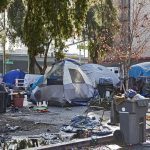
This week, Oklahoma lawmakers voted to hold local governments accountable when officials allow homelessness to grow unchecked and harm neighborhoods. House Bill 3985, which is awaiting the governor’s signature, follows the Goldwater Institute’s Proposition 312, an Arizona measure that ensures property owners can obtain relief when cities fail to enforce laws and allow homelessness-related nuisances to take root.
The lesson from Arizona is clear: accountability works. When local governments know they can be held financially responsible, they are far more likely to enforce the laws already on the books in a way that respects both public safety and individual rights.
Allowing individuals to live in dangerous encampments, often without access to sanitation, treatment, or services, is not compassionate. Rather, it’s neglect and dereliction of duty from local governments. Meanwhile, surrounding communities suffer from increased crime, serious health hazards, and economic decline. HB 3985 does not criminalize homelessness. Instead, it ensures that governments cannot ignore illegal activity and its consequences. It reinforces the idea that laws must be applied evenly, and that public officials are accountable to the people they serve.
Read more here.
There’s a contradiction in our country. Many communities are experiencing a shortage of housing, yet bureaucrats are enacting policies that constrain housing and lead to those very shortages. That’s exactly what happened in Arizona when Gov. Katie Hobbs’ administration imposed a water restriction rule that stifled home construction across Maricopa County—until the Goldwater Institute took a stand.
Media outlets across Arizona took note of Goldwater’s victory and the court’s ruling that the Hobbs administration never had the authority to impose a new water rule without going through the state’s rulemaking process. The Arizona Republic called the court’s ruling a “major blow” to Hobbs’ anti-home-building agenda.
It’s really about the “separation of powers and who gets to be making the rules,” Goldwater Institute Vice President for Litigation Jon Riches told Phoenix radio host Mike Broomhead this week. “It’s no understatement to say that this was the largest bureaucratic overreach in Arizona’s history,” Riches added, noting that Hobbs “literally just ignored the law and … completely shut down new home development exactly where we need it most.”
Elected officials and government bureaucrats regularly engage in illegal power grabs to impose their preferred policies on the people. The Goldwater Institute will continue to fight back whenever and wherever they do.
Read more here.